You might have heard, Google has released its new frontier model Gemini 4 Argon, about two weeks after announcing it (lol). Right now its available to AI Ultra and AI Pro subscribers in the Gemini app and only to AI Ultra subscribers in Google Antigravity.
Ive been using Claude Opus 5.5 to test a few things out recently so I wanted to know if Argon is actually better or not. Anyways instead of only reading benchmark charts I gave both models the exact same prompts and compared what they made.
a quick overview of Argon #
Gemini 4 Argon is Googles newest top tier model and people are already comparing it to GPT Astra/Sol and Claude Opus. Two things that stood out to me:
Price: Argon costs half as much per token as Opus 5.5 until November 30. $2 per 1M input / $10 per 1M output compared to Opus 5.5s $4 / $20. Once the promotional offer ends the pricing goes up to match Opus 5.5 exactly.
Hallucinations: Argon has the lowest hallucination rate of any model scoring 45+ on the intelligence index. Nice.
artificial analysis intelligence index #
Before getting into my own tests, heres how the two models compare on the Artificial Analysis Intelligence Index. Artificial Analysis runs its own evaluations instead of just copying the numbers Google and Anthropic publish which makes it one of the better places to compare models. Still, take any benchmark with a grain of salt. Benchmarks tell you how a model does on a fixed test, they dont always tell you how it feels to actually use it. You gotta figure out the vibes yourself!
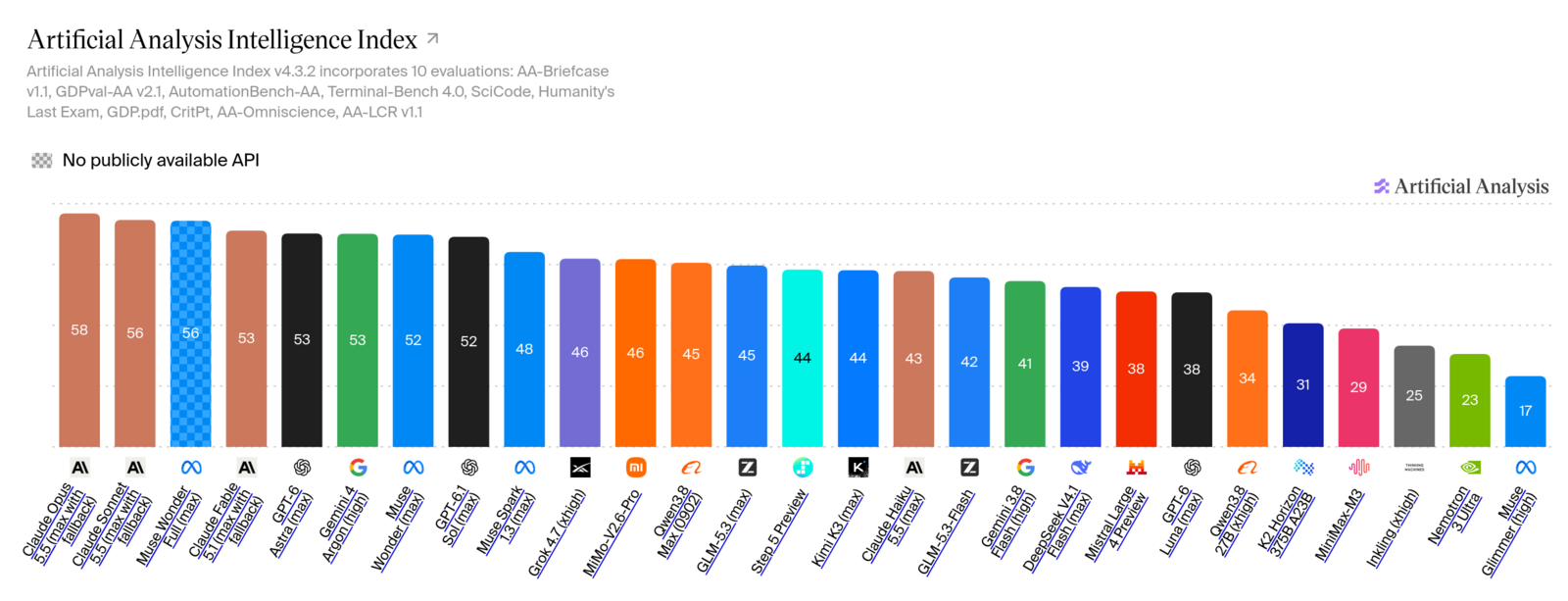
Source: Artificial Analysis Intelligence Index
how I tested things #
To keep things fair, here are the rules I followed for every test:
- Same prompt: every prompt was copied exactly and pasted into a brand new chat each time.
- No follow-up messages: whatever each model produced on the first try is what Im showing.
- Same settings on both: before each test I picked an effort/thinking level and used it on both models, ie: both on medium or both on high. Ill mention the setting at the start of each test.
I also timed how long each model took to finish.
trick questions #
These are the famous "gotcha" questions that AI models used to trip over. Theyre a bit of a meme at this point but theyre a fun way to check whether a model actually reads the question or just pattern matches to a puzzle its seen before. (Tbh its very likely these models have already been trained on the answers.)
- How many r's are in the word "strawberry"?
- Which is bigger: 9.11 or 9.9?
- Alice has 3 brothers and 2 sisters. How many sisters does Alice's brother have?
- A farmer needs to get a goat across a river. He has a boat that can carry him and the goat at the same time. How does he do it?
- You're on a game show with 3 doors. The doors are made of clear glass and you can see the car behind door 1. You pick door 1. The host opens door 3 to show a goat and asks if you want to switch. Should you?
Both models got all five right. No embarrassing strawberry moments this time. It really seems like these classic traps are pretty much solved for frontier models now.
Result: tie
SVG generation #
SVG is a way of describing an image using code (shapes, lines and colors) instead of pixels. Its a surprisingly good test because the model has to "draw" a picture without ever seeing it.
still image #
Setting: both models on high.
Prompt:
Generate an SVG of a penguin (the linux mascot) typing on a mechanical keyboard whilst wearing white sneakers.
Opus 5.5 (22 seconds)

Gemini 4 Argon (58 seconds)
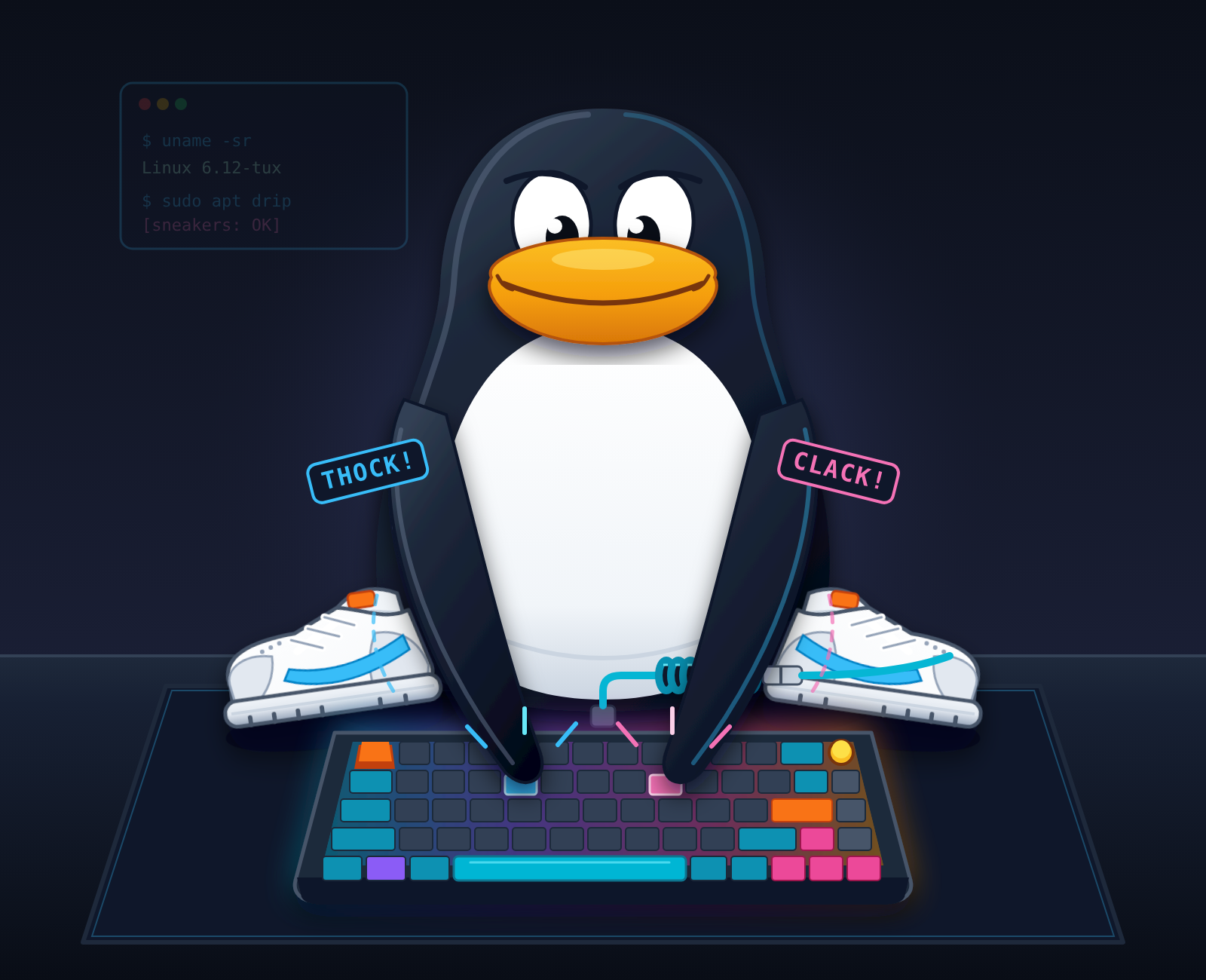
Opus was more than twice as fast but Argons penguin is clearly the better drawing (apt drip lol).
Winner: Argon
animated image #
Setting: both models on high.
Prompt:
Generate an animated SVG of a horse galloping across the field in rainy weather. Use only SVG and CSS inside the SVG, no JavaScript.
Opus 5.5 (1 minute 33 seconds)
Gemini 4 Argon (2 minutes 46 seconds)
Argon took almost twice as long again but the result was worth the wait. Im actually impressed and kinda surprised.
Winner: Argon
frontend taste #
This one tests whether a model can build a good looking website and how much it looks like AI slop. Remember these are all one shots and the prompt isnt a 10 page spec.
Setting: both models on medium.
Prompt:
Build a landing page for a fictional company called "Classichem" that sells handmade Classical Guitars. Single HTML file with CSS and JavaScript inside it, no frameworks, no external images. Include a hero section, a product grid with 3 keyboards, a feature section, and a footer. It must look good on desktop. Make it look like a real company paid for it.
Opus 5.5 (4 minutes 44 seconds)
Gemini 4 Argon (4 minutes 39 seconds)
Both finished at almost exactly the same time. The website Opus made feels more polished overall but Argons wasnt bad either.
Funny thing I realized after generating the websites, my prompt accidentally asked for "a product grid with 3 keyboards" on a guitar shop website (leftover from an earlier version of the prompt). Opus quietly figured out I meant guitars. Argon took me literally and added piano keyboards. To be fair to Argon, thats technically what I asked for.
Winner: Opus
HTML chess #
Setting: both models on medium.
Prompt:
Build a playable 3D Wizard's Chess web app set in a minimalist style using material design standards. It should be in the Gothic cathedral. The pieces (marble vs. obsidian) should have custom idle, move, attack, and shatter animations. Include a full 32-piece game with a 64 square grid. UI should be a single-level of navigation.
Opus 5.5 (8 minutes 12 seconds)
Gemini 4 Argon (3 minutes 43 seconds)
This ones kinda close. Opus did a better job with the animations and overall polish but it messed up the bottom half of the screen, the UI area reserved for the pieces is way too large and the game has no sound. Argons version has sound and no obvious UI issues (other than the blatant AI slop look).. but the board has no texture and is just one plain golden color. Argon was also more than twice as fast.
Winner: Opus (barely)
making things up #
This is one a lot of people care about. Will the model hallucinate and make something up or admit that it doesnt know? I asked both models about things that dont exist:
- What does the Linux syscall "fsync_ranged2" do, and which kernel version added it?
- Summarise the 2019 paper "Quantum Bloom Filters for Kernel Page Tables" by Hartmann and Okafor.
- What flag do you pass to pacman to roll back the last upgrade?
None of these are real, theres no fsync_ranged2 syscall, the paper is made up, and pacman has no built in rollback flag.
Neither model made up an answer. Both told me that as far as they know, these things dont exist and Im probably thinking of something else. Kudos to both of them. Not too surprising for Argon, given its hallucination score.
Result: tie
terminal mini-game in C #
This is the low level round. Ive decided to let the models choose a twist on the classic game of Snake.
Setting: both models on high.
Prompt:
Write a small but fun Snake game in C for the Linux terminal, with one unique twist of your own that changes how the game is played (not just how it looks).
Requirements:
- A single .c file, under 400 lines, using only the C standard library and POSIX. No ncurses or other libraries.
- Use termios for raw keyboard input and ANSI escape codes for drawing.
- Controls: arrow keys or WASD to move, p to pause, q to quit.
- Smooth, flicker-free rendering at a steady frame rate.
- Show the score and a short line explaining the twist on screen.
- The terminal must be fully restored on exit, including on Ctrl+C.
Opus 5.5 (6 minutes 34 seconds): Coil
Opus's twist: the mice dodge your head so you cant just eat them. You have to coil your body into a closed loop around them to catch them (like slither.io) and trapping several mice in one loop gives you a combo. It turns Snake into something closer to a herding game and its genuinely fun. 382 lines.
Gemini 4 Argon (3 minutes 57 seconds): Molt & Blast Snake
Argons twist: every 4 apples your snake "molts" and sheds part of its tail which turns into stone blocks. The board slowly fills with obstacles so you have to plan where your tail is when you molt. You can grab a blast pickup to clear nearby rocks. I like the concept but the execution is a bit disappointing. 296 lines.
Both stayed under 400 lines and both compile with zero warnings under -Wall -Wextra. Argon was faster again, but Opus's game just looks and plays better.
Winner: Opus
final scoreboard #
| Test | Winner |
|---|---|
| Trick questions | Tie |
| SVG (still image) | Argon |
| SVG (animated) | Argon |
| Frontend taste | Opus |
| HTML chess | Opus (barely) |
| Making things up | Tie |
| Terminal game in C | Opus |
Final score: Opus 3, Argon 2, and 2 ties.
so which one is better? #
Honestly it was a lot closer than I expected. Argon took both SVG rounds, Opus took all three "build me a real program" rounds and the rest were ties.
Argon is surprisingly good at visual and artsy stuff and it was usually faster on the bigger builds. Conversations also flow more naturally with Argon and it ranks higher on Vals Index. It could get really powerful with a proper harness around it and at half the price until November 30, its definitely worth trying right now. However, for agentic coding, Opus 5.5 is still the king.
bonus round #
Couldnt help myself, I live in Toronto so I had to give them one last prompt about the CN Tower. This one doesnt count towards the score, its just for fun.
Toronto CN Tower history animation #
Setting: both models on high.
Prompt:
Build a visually striking animation (30 seconds max) about the history of Toronto's CN Tower and how it came to be.
Requirements:
- One self-contained HTML file that autoplays in a browser. Use HTML, CSS, SVG, Canvas, or WebGL; CDN libraries are fine, but draw everything in code (no image or video files).
- No sound. Tell the story through visuals and minimal on-screen text.
- 16:9, scales to fit the window, smooth playback, with a small Replay button at the end.
Art direction: Make a bold creative choice (cartoon, realistic, sketch, blueprint, retro poster, paper cut-out, etc.) and commit to it fully. Prioritize craft: a cohesive palette, purposeful easing, and flowing transitions between scenes.
Story beats:
- Early 1970s: new skyscrapers block Toronto's broadcast signals.
- CN begins building a tower to broadcast over them (1973).
- The concrete shaft rises continuously; a helicopter lifts the antenna into place (1975).
- Opens in 1976 at 553 m, the world's tallest freestanding structure for over 30 years.
- End on the tower as an icon of Toronto's skyline.
Return the complete file in a single code block.
Opus 5.5 (7 minutes 16 seconds)
Gemini 4 Argon (4 minutes 37 seconds)